
In the ever-evolving landscape of food processing, ensuring both safety and quality remains paramount. Traditional thermal pasteurization methods, while effective, often compromise the sensory and nutritional attributes of food. Enter Radio-Frequency (RF) pasteurization—a cutting-edge technology that promises to revolutionize the industry by offering rapid, uniform heating without the drawbacks of conventional methods.
Understanding RF Pasteurization
RF pasteurization employs electromagnetic waves, typically in the 1–100 MHz range, to generate heat within food products. Unlike conventional heating, which relies on surface heat conduction, RF energy penetrates the product, causing polar molecules to oscillate and generate heat uniformly throughout the volume. This volumetric heating ensures rapid temperature rise, reducing processing time and preserving the food’s sensory and nutritional qualities.
Advantages Over Traditional Methods
- Uniform Heating: RF energy ensures consistent temperature distribution, minimizing cold spots that can harbor pathogens.
- Speed: Rapid heating reduces processing time, enhancing throughput and energy efficiency.
- Product Quality: Lower thermal exposure preserves texture, flavor, and nutritional content.
- Versatility: Effective for both high- and low-moisture foods, including those packaged in dielectric materials.
Studies have demonstrated RF’s efficacy in inactivating pathogens like Salmonella and E. coli in various food matrices, including spices and low-moisture products .
TOP b.v.: Pioneering RF Pasteurization
At the forefront of this technological advancement is TOP b.v., a Wageningen-based company renowned for its innovative solutions in food processing. Their patented RF pasteurization system exemplifies the practical application of this technology.
TOP b.v.’s approach addresses common challenges in RF heating, such as non-uniform heating and potential thermal runaways. Their system incorporates:
- Variable Frequency Control: Adjusts frequencies to match the dielectric properties of different food products, ensuring optimal energy absorption.
- Automated Impedance Matching: Maintains efficient energy transfer, adapting to changes in product composition and geometry.
- Advanced Electrode Design: Ensures uniform electric field distribution, enhancing heating consistency .
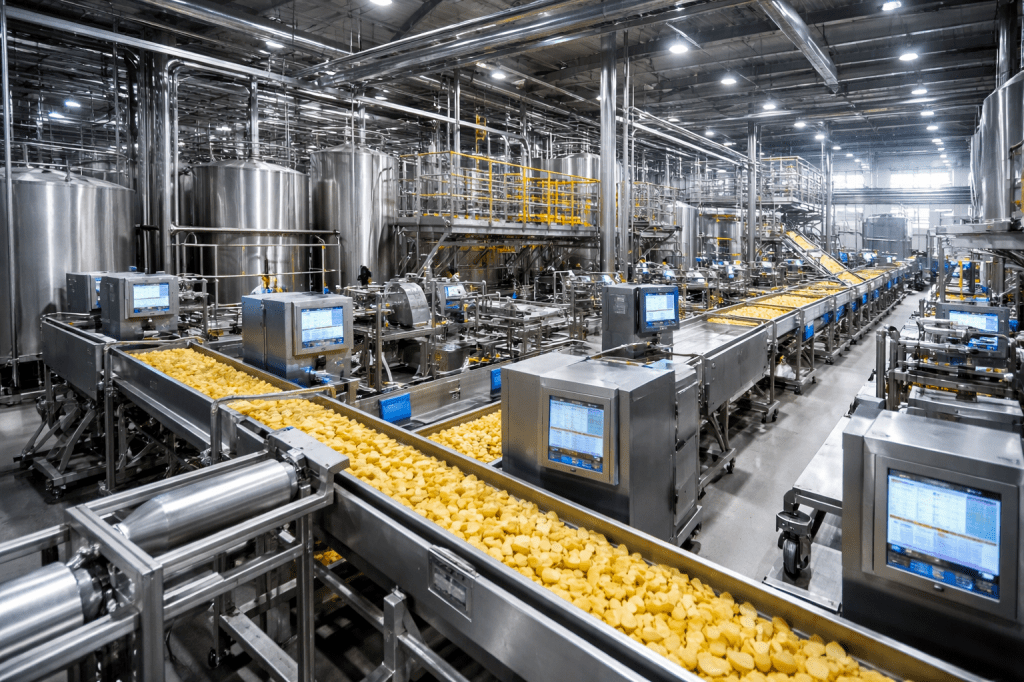
These innovations enable the effective pasteurization of diverse products, from liquid foods to packaged solids, without compromising quality.
Applications and Future Prospects
RF pasteurization holds immense potential across various sectors:
- Spices and Herbs: Effective in inactivating pathogens in low-moisture environments .
- Bakery Products: Ensures microbial safety without affecting texture or flavor.
- Dairy and Beverages: Maintains nutritional and sensory qualities while ensuring safety.
- Ready-to-Eat Meals: Facilitates in-package pasteurization, extending shelf life and reducing contamination risks.
As consumer demand for minimally processed, high-quality foods grows, RF pasteurization offers a compelling solution. Its scalability and adaptability make it a promising technology for both large-scale manufacturers and artisanal producers.
Conclusion
RF pasteurization represents a significant leap forward in food processing technology. By combining efficiency with product integrity, it addresses the industry’s dual mandate of safety and quality. Companies like TOP b.v. are leading the charge, translating scientific principles into practical applications that benefit both producers and consumers.
For businesses aiming to stay ahead in the competitive food industry landscape, embracing RF pasteurization could be a strategic move towards innovation and excellence.

 Fresh Food Novelties
Leave a comment