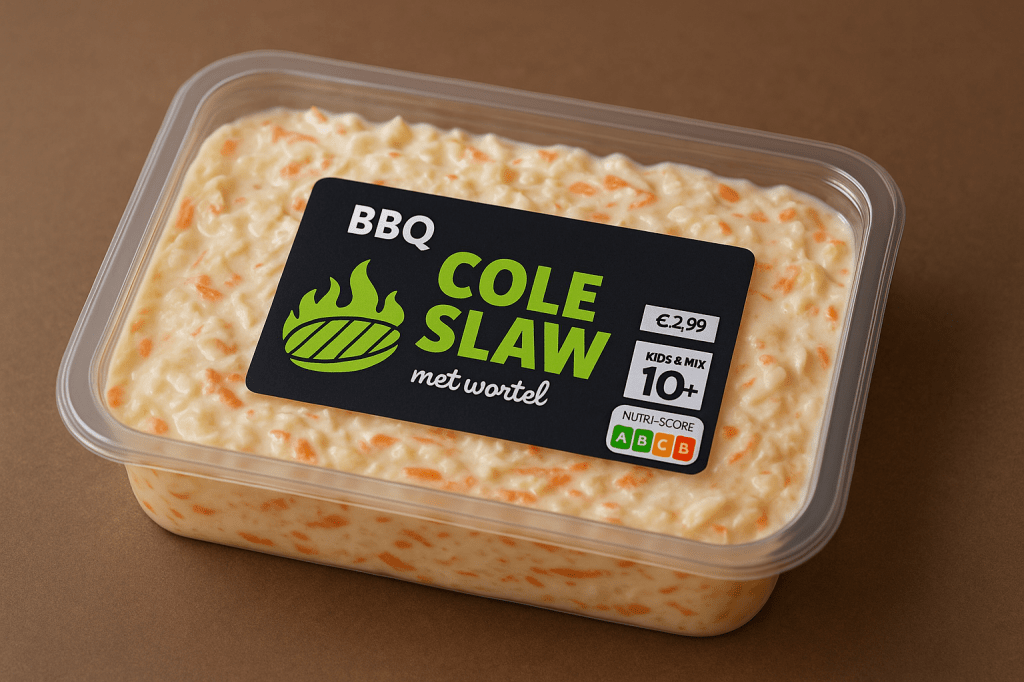
In the chilled aisle of your local supermarket, fresh is king. Products like potato salad, pasta salad, and coleslaw are marketed as fresh, homemade-style options for quick meals or summer BBQs. But have you ever wondered how these creamy, vegetable-rich products manage to stay fresh for days—or even weeks—in your fridge?
Let’s take a closer look at one typical product: the BBQ Cole Slaw with carrot from Dutch supermarket chain Jumbo. Despite being made from raw cabbage and carrots, this product stays safe and appetizing in the fridge for many days. How? The answer lies in a careful blend of food science and modern formulation techniques.
The Basics: Cold Slows Spoilage—But It’s Not Enough
Chilled coleslaw is stored at refrigeration temperatures (typically below 7°C). This slows down the activity of spoilage bacteria and enzymes. But cold alone is not enough. Coleslaw is made from raw vegetables and contains high moisture—a dream environment for microbial growth if not properly managed.
So how is it done?
A Multi-Layered Preservation Strategy
To ensure safety and quality, several strategies are combined:
1. Acidification and Low pH
One of the oldest and most effective preservation techniques is lowering the pH of a food product. The vinegar in coleslaw contributes acetic acid, and additional food-grade acids such as citric acid (E330) and lactic acid are included. These acids make the environment hostile to pathogens and spoilage organisms.
Low pH (<4.5) not only inhibits most bacteria but also boosts the effectiveness of certain preservatives.
2. Conservatives: E211 and E202
Two well-known preservatives are used in the Jumbo coleslaw:
- E211: Sodium Benzoate
This compound is especially effective against yeast and some bacteria in acidic environments. It’s widely used in soft drinks, sauces, and salad dressings. It helps prevent fermentation and off-flavors caused by microbial activity. - E202: Potassium Sorbate
Particularly effective against molds, this compound works best at lower pH levels. It’s also commonly used in dairy products and fruit-based foods.
These substances are tightly regulated in the EU and considered safe at concentrations below the legal limits. However, they are sometimes viewed with skepticism by consumers seeking “clean labels”—a trend that’s driving innovation in natural preservation techniques.
3. Antioxidants: E300 (Vitamin C), E223
To preserve freshness and prevent color and flavor degradation, ascorbic acid (E300) and sodium metabisulfite (E223)are used. These antioxidants protect against oxidation, especially important in a product containing raw cabbage and oil.
4. Texturizers and Stabilizers
To maintain the creamy, crunchy texture, Jumbo uses:
- Thickeners: E415 (xanthan gum), E412 (guar gum)
- Modified starches and egg yolk for emulsion stability.
This ensures that the dressing doesn’t separate and that the mouthfeel stays consistent—even after a week in the fridge.
Does That Mean It’s Not “Fresh”?
Interestingly, yes—and no.
From a microbiological perspective, the product is fresh in the sense that it hasn’t been pasteurized or heat-treated. The vegetables are raw. But it’s preserved fresh—meaning it’s carefully stabilized through pH control, preservatives, and cold storage. It’s a prime example of the modern fresh category: refrigerated, short shelf life (7–14 days), but processed for safety.
The Nutritional Profile
This coleslaw is low in protein and fat but contains about 11.7 g of sugar per 100 g, mostly from the added sugar in the dressing. It earns a Nutri-Score of D, reflecting the higher sugar and salt content relative to its nutrient density. That said, it’s still a popular choice for convenience and taste.
Final Thoughts
Coleslaw is more than just cabbage and carrots in a creamy dressing. Behind its seemingly simple ingredients lies a sophisticated mix of food science techniques that balance safety, shelf life, and taste.
As consumer demand grows for fresh-but-convenient options, products like chilled salads will continue to walk the line between minimally processed and carefully preserved. For now, a refrigerated cole slaw with the right blend of acids, preservatives, and cold storage remains a textbook case in how the food industry keeps “fresh” foods both tasty and safe.


 Fresh Food Novelties
Leave a comment