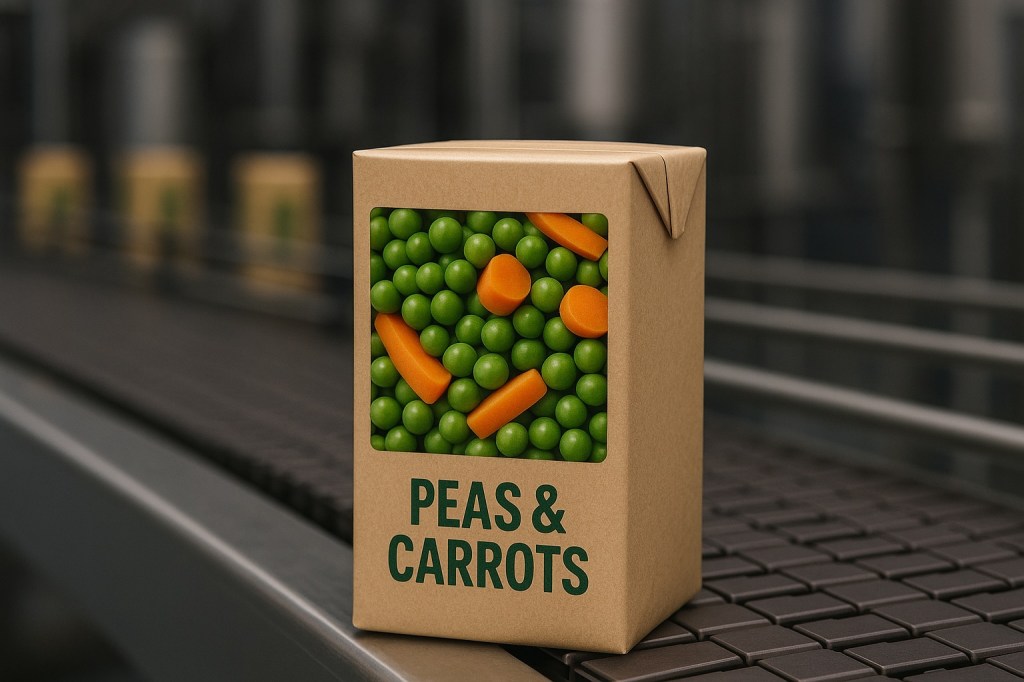
In the world of long shelf-life food products, packaging is everything. For decades, if your product required sterilization—meaning it had to be free of all viable microorganisms to ensure safety without refrigeration—your packaging options were limited. Glass jars and tin cans (also known as “retortable cans”) were the gold standard. But now, a quiet revolution is taking place. A new generation of carton-based packaging has entered the market, capable of withstanding the rigors of retort sterilization while offering significant advantages in terms of sustainability, convenience, and branding.
And in the Netherlands, one company is leading the charge. Baltussen, known for its high-quality preserved vegetables and legumes, has taken a bold step by transitioning part of its product line—including its “Boon!” brand of beans and vegetable mixes—into retortable carton packaging. This move could mark the beginning of a broader transformation across the ready-meal and shelf-stable food category.
What Is Retort Sterilization?
To understand the innovation, we first need to understand the process it’s designed for. Retort sterilization—also referred to as autoclaving—is a heat treatment that involves placing food products (already sealed in their final packaging) into a pressurized chamber, where they are heated to at least 121°C (250°F) for 30 minutes or more. The goal is to eliminate Clostridium botulinum, the bacterium responsible for botulism, as well as other spoilage organisms.
This process is well-suited to low-acid foods (pH > 4.6) such as beans, soups, meat-based sauces, and mixed vegetables. These products cannot be made safe by pasteurization alone and must undergo full sterilization to be shelf-stable.
Until recently, only materials such as glass and metal were suitable for this treatment. These materials are rigid, heat-resistant, and impermeable—making them ideal for the high temperatures and pressures inside a retort chamber. But they also have downsides: they are heavy, energy-intensive to produce, and difficult to shape into modern, convenient formats.
The Rise of the Retortable Pouch… and Now Carton
In the early 2000s, flexible retort pouches (usually made of laminated plastic and aluminum) began to gain popularity. These “flat cans” were lighter and offered faster heat penetration due to their slim profile. While pouches are now common for products like curries, stews, and rice dishes in some markets, they have not completely replaced cans or jars due to logistical, marketing, and recycling challenges.
Now comes a new player in the game: the retortable carton. Specifically, Tetra Pak’s “Recart” packaging system—a multilayer carton with an aluminum liner—has been designed to withstand sterilization in a retort chamber. This means products can be filled, sealed, and retort-processed directly in a format that is lightweight, stackable, and visually striking on retail shelves.
How Recart Works
Recart packages are formed from pre-printed, laminated cartonboard with high barrier properties. The laminate structure typically includes:
- Cartonboard for stiffness and printability
- Aluminum for gas and light barrier
- Polyethylene layers for heat sealing and moisture barrier
Unlike traditional Tetra Pak cartons used for aseptically filled milk or juice (which are filled cold after UHT or ESL treatment), Recart packages are filled with unsterilized product, sealed, and then sterilized inside the retort. The key challenge here is structural integrity under heat and pressure—a hurdle Tetra Pak has reportedly overcome through years of research and engineering.
Baltussen and Boon!: A First in the Netherlands
Baltussen, based in Driel (Gelderland), is one of the Netherlands’ oldest producers of preserved vegetables. Traditionally known for its high-quality jarred and canned goods, Baltussen has now made a strategic leap into the future by adopting Recart for part of its Boon! product range.
The Boon! brand features beans and legumes, as well as vegetable medleys such as peas-and-carrots. These products are ideal candidates for retort sterilization, and until recently, they were packaged almost exclusively in glass jars or cans. But now, with the new carton format, Boon! offers a modern, lightweight alternative with significant benefits for retailers and consumers alike.
Benefits of Retortable Carton Packaging
Let’s take a closer look at why this new technology matters:
1. Sustainability
Compared to glass and metal, carton-based packaging has a lower carbon footprint in production and transportation. The lighter weight reduces fuel use in logistics, while the rectangular format improves pallet efficiency. Moreover, many Recart cartons are recyclable through existing carton waste streams.
2. Convenience
Carton packs are easier to open, store, and reseal. Their rectangular shape fits better in kitchen cupboards and offers single-serving or meal-ready portioning. With easy-tear openings and reduced weight, the format is especially attractive to younger consumers and families on the go.
3. Shelf Appeal
Retailers love Recart because of its eye-level display potential. Unlike cans (which typically lie horizontally in stores), Recart cartons stand vertically and can be printed edge-to-edge with vibrant branding. This gives food brands a larger canvas to tell their story and connect with consumers.
4. Product Integrity
Thanks to the slim profile and uniform heating geometry, heat transfer is faster and more uniform than in cans or jars. This means shorter sterilization times, better nutrient retention, and improved sensory qualities such as texture and color.
5. Versatility
Although beans and vegetables are an obvious starting point, Recart is ideal for many other product categories: soups, pasta sauces, meat-based ragùs, lentil stews, risottos, and even pet food. Essentially, any low-acid food requiring sterilization can benefit from this format.
Challenges and Considerations
Despite its many benefits, retortable carton packaging also presents some challenges.
- Investment cost: The technology requires specialized filling and sealing equipment, as well as compatibility with existing retort systems. This can mean a substantial upfront investment for manufacturers.
- Consumer perception: Some consumers associate carton packaging with beverages or fresh products, not with shelf-stable cooked meals. Marketing and education will be necessary to build consumer confidence.
- Barrier limitations: While aluminum liners provide excellent protection, they do make full recyclability more complex. Solutions to improve separation of layers are under development.
- Heat distortion: Cartons must be engineered to maintain their shape during sterilization, which can be demanding. Tetra Pak’s design reportedly includes reinforcing corners and optimized geometry to withstand deformation.
The Road Ahead
With Baltussen blazing the trail in the Netherlands, the rest of the European food industry is likely to follow. Especially in categories where sustainability and convenience are top priorities, the move from glass and tin to modern retortable cartons could be both logical and profitable.
For food manufacturers and retailers, this transition opens up exciting possibilities. Imagine supermarket shelves where tomato soup, lentil curry, and Mexican chili are all packaged in colorful, lightweight cartons instead of clunky cans. Imagine lower transport emissions, fewer breakages, and packaging that speaks directly to a younger, sustainability-minded audience.
For consumers, the benefits are tangible: easier to handle, quicker to heat, and better for the planet.
Conclusion: A Small Box with Big Impact
As the food industry continues to innovate, it’s often the “invisible” technologies—like packaging—that bring the biggest change. Retortable carton packaging may not seem flashy, but its impact could be profound. By combining the microbiological safety of retort sterilization with the sustainability and convenience of cartons, it offers a rare win-win-win: for producers, for retailers, and for consumers.
Baltussen and Boon! have proven that it can be done. The question now is not if others will follow—but when.

 Fresh Food Novelties
Leave a comment